
5 Common Causes of Knee Pain in Malaysian Adults (And When to See a Physio)
If you've been dealing with knee pain for more than a couple of weeks, you're not alone. Here are the five most common causes we see at our Kelana Jaya centre — and how to recognise yours.
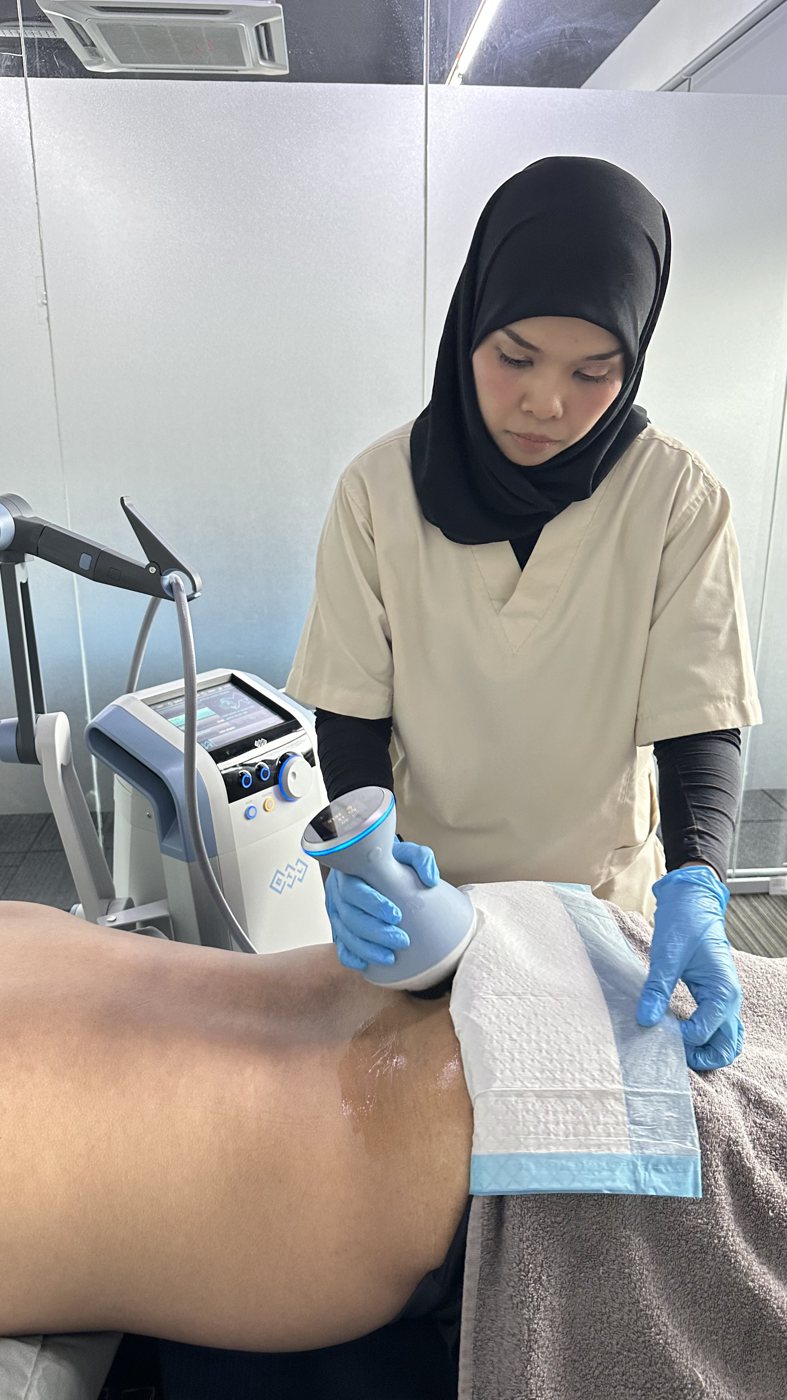
If you've been dealing with knee pain for more than a couple of weeks, you're not alone. Knee pain is the single most common reason adults across PJ, Subang, and the wider Klang Valley walk into a physiotherapy centre.
The challenge is that "knee pain" is not a diagnosis — it's a symptom. Treating it well means understanding which of the dozens of possible causes is yours. Here are the five we see most often at Fisiouzma in Kelana Jaya, and how to spot the difference.
1. Knee osteoarthritis (OA)
The most common cause of knee pain in adults over 45, especially women and anyone carrying extra body weight. It's a slow wearing of the cartilage in the knee joint — not the catastrophic "bone on bone" emergency many patients fear.
What it feels like
- Stiffness in the morning that improves after about 15–20 minutes of moving around
- Pain on the inside of the knee that worsens with stairs, squatting or kneeling
- Occasional swelling or a "creaking" sensation (crepitus)
- Worse at the end of a long day on your feet
What helps
Knee OA is one of the most rewarding conditions to treat with physiotherapy. International guidelines (NICE, OARSI) recommend supervised exercise and weight management as first-line treatment — even before painkillers. Combined with manual therapy and modalities like focused shockwave or ultrasound, most patients see meaningful improvement in 6–10 sessions.
Physiotherapy can delay or even avoid the need for knee replacement surgery in mild to moderate cases — provided it's started early and done properly.
2. Patellofemoral pain (runner's knee)
A pain at the front of the knee, around or behind the kneecap, especially common in active adults under 40 — runners, hikers, weekend footballers, gym-goers, and people who sit at desks all day then exercise in evenings.
What it feels like
- A dull ache around the front of the knee
- Worse going down stairs more than up
- Worse after sitting with the knee bent for a long time ("movie-goer's sign")
- No major swelling, no clear injury moment
What helps
Runner's knee is almost always a problem of load management and movement mechanics, not the knee structure itself. The treatment? Strengthening the hip and glute muscles that control the knee, releasing tight quads and ITB, adjusting training load, and sometimes a brief period of taping. Most cases resolve within 4–8 sessions.
3. Ligament injuries (ACL, MCL, meniscus)
Usually the result of a specific injury — a twist while playing futsal, landing awkwardly from a jump, a knee that gave way on the badminton court, or a fall.
What it feels like
- You can usually remember the exact moment it happened — sometimes with a "pop"
- Rapid swelling within hours (ACL) or over a day or two (meniscus)
- A feeling of instability or "giving way"
- Pain when straightening or fully bending the knee
What helps
This is where you should see a physiotherapist (or sports doctor) within the first week — even before you have an MRI. We can clinically test which structures are likely injured and guide what to do in the critical early days. Some ligament injuries respond beautifully to rehab alone; others (complete ACL tears in young athletes) typically need surgery followed by 6–9 months of structured rehab. Either way, what you do in the first month matters.
4. Patellar tendinopathy ("jumper's knee")
Pain just below the kneecap, where the patellar tendon attaches to the shin. Classic in jumpers (basketball, volleyball), but also in runners, footballers, and gym-goers who load up squats and lunges.
What it feels like
- A localised, pinpoint pain just below the kneecap
- Worst during the first reps of a workout, sometimes warming up as you go
- Stiff and sore the morning after activity
- Can persist for months or years if untreated
What helps
Tendinopathy is one of the most misunderstood injuries. Rest does not work — in fact, complete rest often makes it worse. The evidence-based treatment is heavy slow resistance training (specific, progressive loading of the tendon), often combined with focused shockwave therapy. Done correctly, even chronic cases respond well within 3 months.
5. Post-surgical knee pain
If you've had ACL reconstruction, meniscus surgery, or total knee replacement (TKR), pain and limited movement during recovery is normal — but how you rehab it determines your long-term outcome.
What it looks like
- Stiffness, particularly in the first 6–12 weeks post-op
- Difficulty fully straightening or bending the knee
- Weakness, especially in the quad muscle (which often "switches off" after surgery)
- Swelling that comes and goes with activity
What helps
Post-surgical rehab is structured, time-bound, and worth every session. We follow your surgeon's protocol where one exists, and apply best-practice rehab where it doesn't. Most patients undergoing TKR walk without a cane within 4–6 weeks; ACL patients return to sport in 6–9 months. Skip the rehab, and you risk persistent stiffness, weakness, and re-injury.
When should you see a physiotherapist?
As a rule of thumb:
- Knee pain lasting more than 2 weeks — see us
- A specific injury (twist, fall, sport) — see us within the week
- Rapid swelling, locked knee, or "giving way" — see us within days
- Worsening despite rest — definitely see us
- Pre-surgery or post-surgery — yes, we work with surgeons
What a knee assessment with us looks like
Your first visit at Fisiouzma is a full clinical assessment. We take a detailed history, then run movement screening, palpation, and orthopaedic special tests to pinpoint which structures are involved. You leave knowing what's wrong, what the treatment plan looks like, and what we both expect from the next few weeks.
If imaging (MRI, X-ray) or a specialist opinion is needed, we'll refer you. If physiotherapy is the right answer, we'll start treatment in that same session.
Knee pain isn't something you should just "live with" or push through. The earlier it's properly assessed, the simpler and quicker the recovery. WhatsApp us today and we'll get you booked in — usually within the week.
Have a question about your case?
WhatsApp us — describe your symptoms in your own words. We'll respond personally, usually within an hour.
 WhatsApp us
Related on Fisiouzma
Knee Pain Treatment in PJ
Our knee-pain service — conditions we treat, our approach, and what to expect.
See service →Post-Surgical Rehab
Structured recovery after ACL, knee replacement and other surgeries.
See service →ACL Surgery Recovery Timeline
A realistic 9-month rehabilitation roadmap after ACL reconstruction.
Read article →Your First Physio Session
A step-by-step walkthrough of what happens at your first visit.
Read article →