
From slipped disc to sciatica — hands-on relief that lasts.
Back pain that's stopping you sleeping, sitting at work, or picking up your kids? We treat the root cause — not just the symptom — using techniques proven to outperform painkillers in the long run.
 WhatsApp for assessment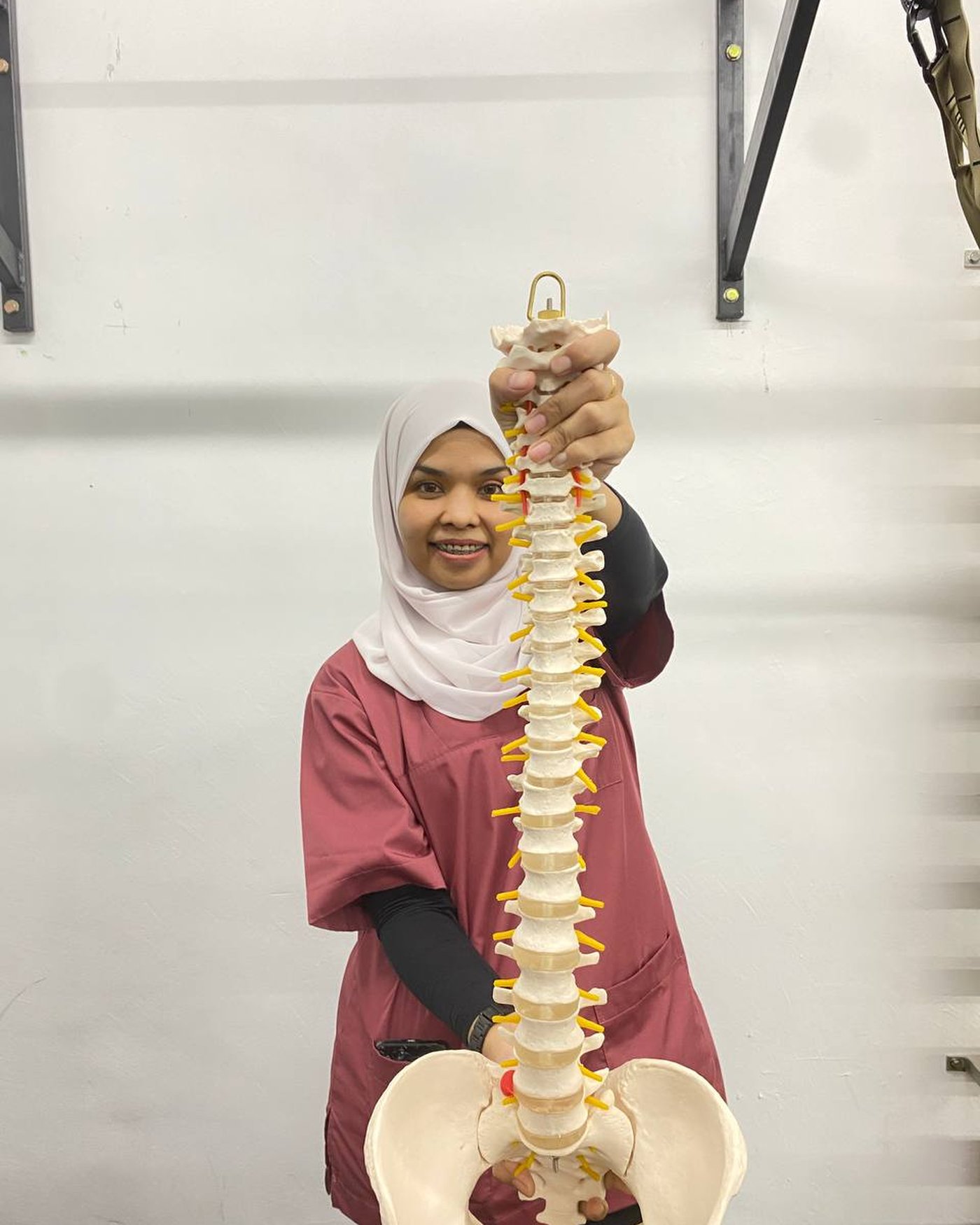
Back & spine conditions we treat
More than 80% of Malaysian adults will experience significant back pain in their lifetime. Most cases respond well to skilled physiotherapy — without surgery, injections or long-term medication.
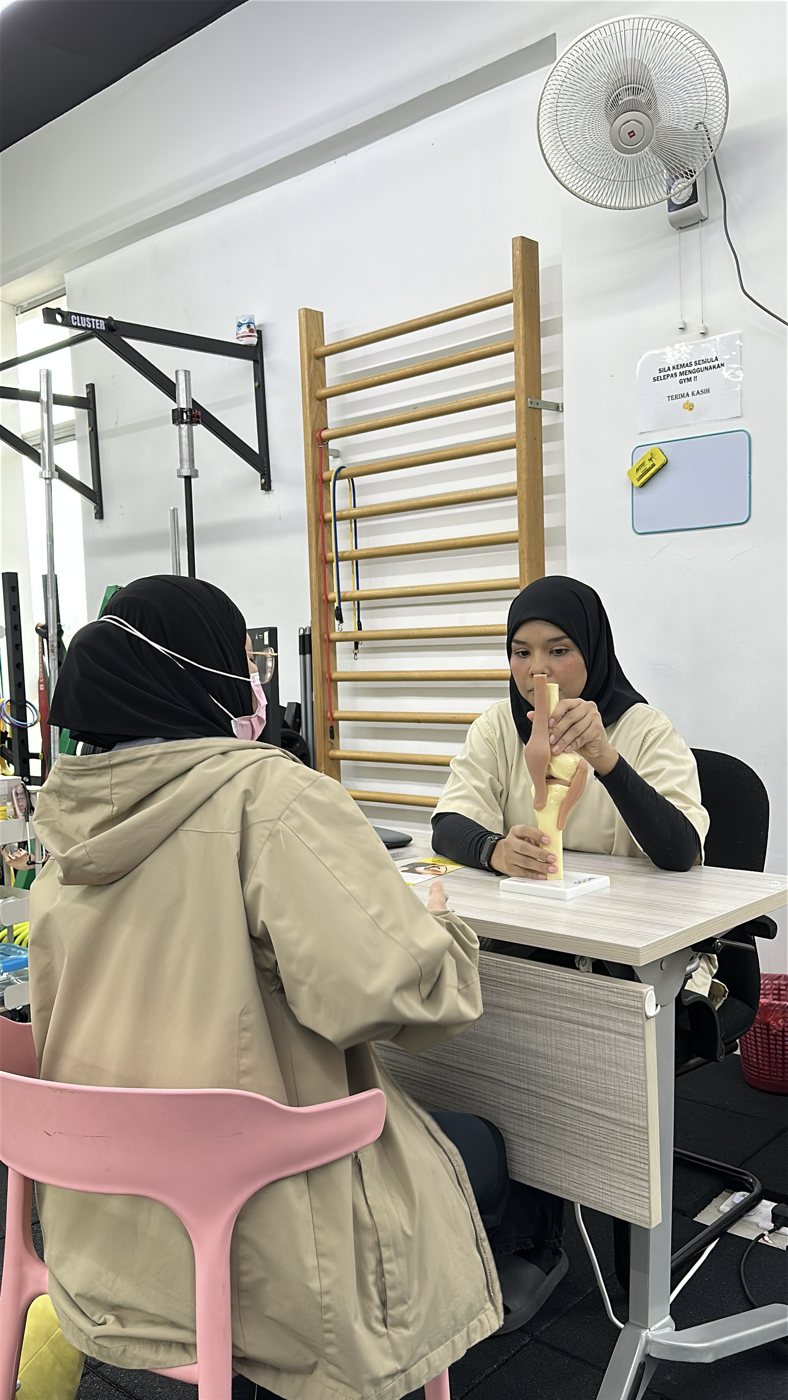
How we treat back pain & slipped disc
Our protocol follows the latest spine-rehabilitation evidence: relieve, restore, reinforce. We don't crack and pray — we test, treat, and re-test.
Rule out red flags
We screen for warning signs (cauda equina, infection, fracture) and refer immediately if needed. Safety first.
Decompress & calm
Manual decompression, McKenzie repeated movements, soft-tissue release and infrared therapy to reduce nerve pressure and muscle guarding.
Restore movement
Specific spinal mobilisation, neural mobilisation and posture re-education so you can sit, sleep and bend without flare-up.
Reinforce the core
Progressive deep-core, glute and hip mobility training so your spine has the support it needs long-term. This is what stops the cycle.
Techniques we use for spine cases
Slipped disc and back pain rarely respond to just one modality. We combine these, in a sequence tailored to your stage of recovery:
- Manual Spinal Mobilisation — Restores joint movement in stuck segments above/below the painful level
- McKenzie Method — Repeated movements that centralise disc-related leg pain back into the spine
- Infrared Therapy — Deep heat penetration to relax the deep multifidus, quadratus lumborum and piriformis
- Neural Mobilisation — Glides the sciatic / median nerve to reduce radiating pain
- Therapeutic Ultrasound — Reduces inflammation around irritated nerve roots
- Core & Posture Retraining — Deep-core activation, hip hinge mechanics, ergonomic coaching
About back pain treatment
I have an MRI showing a slipped disc — can physio actually help?
Yes. Most disc prolapses heal without surgery if managed properly. Research shows that within 12 months, 60–80% of patients improve significantly with physiotherapy. The disc itself often shrinks naturally. Our job is to manage your symptoms, restore movement and prevent recurrence.
Should I rest or move when my back is in spasm?
Brief rest (1–2 days max), then gentle movement. Long bed rest worsens back pain. We'll teach you the right movements to do, and the ones to avoid, in your first session.
Will physiotherapy help if I have sciatica?
Yes, especially if started early. Nerve gliding, specific spinal mobilisation, McKenzie protocols and core rehabilitation are highly effective. Most sciatica cases resolve significantly in 6–12 sessions.
Do you crack backs like chiropractors?
We use spinal mobilisation (slow, controlled, low-force) rather than high-velocity manipulation. It's safer, more targeted, and equally effective per the latest evidence.
How can I prevent back pain from coming back?
Strong core + strong glutes + good hip mobility + workstation ergonomics. We coach all four. Most patients stay pain-free as long as they keep up the 10-minute daily programme we prescribe.
Don't let back pain run your week.
WhatsApp us your symptoms. We'll tell you honestly whether we can help — and what your recovery is likely to look like.
Helpful reads from our blog
Slipped Disc: Try Physio Before Surgery
Most slipped discs heal without surgery. Here's when to escalate.
Read article →The Office Worker's Survival Guide
How to prevent back and neck pain at your desk.
Read article →Your First Physio Session
A step-by-step walkthrough of what happens at your first visit.
Read article →