
After stroke, every week of rehab matters.
Recovery from stroke and other neurological conditions depends on early, consistent, and skilled rehabilitation. Our lead physiotherapist has spent over a decade working with neuro patients — restoring movement, retraining the brain, and rebuilding lives.
 WhatsApp for assessment
Neurological conditions we treat
Neuro rehab requires patience, repetition and skill — your nervous system is rewiring with every session, given the right stimulus.
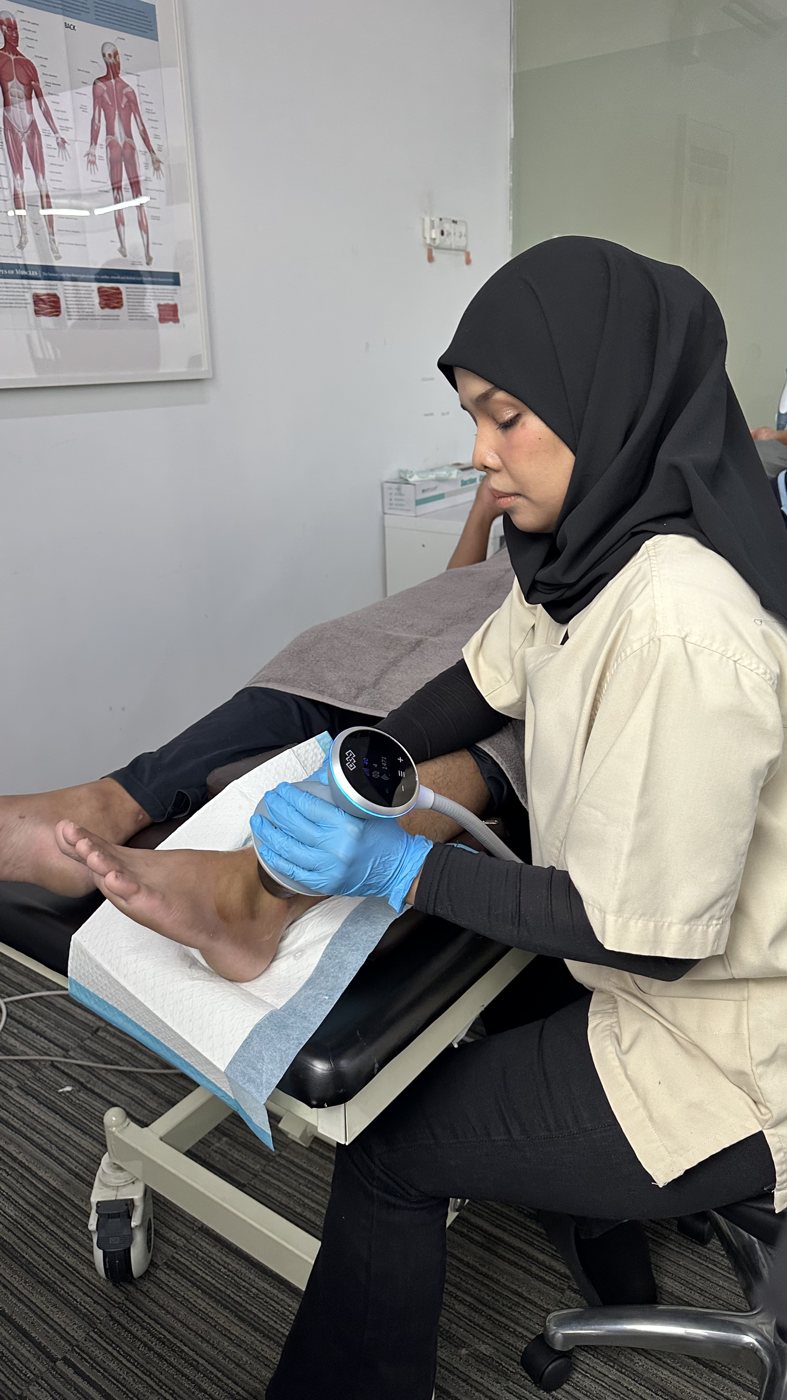
Our neurological rehab approach
Neuroplasticity — the brain's ability to rewire — is real, but it needs the right input: high-repetition, task-specific, intensive practice. That's what every session focuses on.
Detailed neuro assessment
Tone, reflexes, sensation, balance, gait, transfers, and ADL ability. We set realistic, meaningful goals with you and the family.
Task-specific training
We practise the actual movements you need — standing from a chair, walking, holding a cup, dressing. Repetition matters more than fancy equipment.
Tone & movement control
Stretching, positioning, facilitation techniques and PNF to reduce spasticity and improve smooth movement.
Endurance & long-term gains
Cardiovascular conditioning, progressive strength, balance work — research shows neuro patients keep improving for years with sustained rehab.
Techniques used in neuro rehab
Skilled hands and intelligent programming matter more than expensive machines:
- Bobath / NDT Approach — Hands-on facilitation of normal movement patterns post-stroke
- PNF (Proprioceptive Neuromuscular Facilitation) — Diagonal patterns to restore functional movement
- Gait Re-education — Treadmill, ground walking, orthotic prescription if needed
- Balance & Postural Control — Static and dynamic balance training across surfaces
- Functional Electrical Stimulation — Activates weakened muscles during functional tasks
- Family & Caregiver Training — Safe transfers, home exercises, positioning — for every visit's continuity
About stroke rehab treatment
How soon after a stroke should rehab start?
As soon as you're medically stable. In-hospital rehab usually starts within days. Once discharged, restarting outpatient rehab within 1–2 weeks is ideal. Earlier and more intensive rehab leads to better outcomes — but it's never too late.
How long does post-stroke recovery take?
The biggest gains often happen in the first 3–6 months, but meaningful improvements continue for years with consistent rehab. We routinely see patients regain function 1–2 years post-stroke.
Can rehab still help years after a stroke?
Yes. Neuroplasticity continues throughout life. Many of our patients make new functional gains even years after their event with the right programming.
Will rehab cure my Parkinson's / MS?
These are progressive conditions — rehab doesn't cure them, but the right programme dramatically slows decline, preserves function, manages symptoms and improves quality of life. Patients who exercise consistently fare significantly better long-term.
Do you involve family in stroke rehab?
Yes — and we strongly encourage it. Families learn safe transfers, home exercises, positioning and what to watch for. Continuity at home is what locks in centre gains.
Every session is a step back to independence.
WhatsApp us your story — what happened, when, and where they are now. We'll be honest about realistic goals and recommend a starting plan.