
What Actually Happens at Your First Physiotherapy Session
Never been to a physiotherapist before? Here's exactly what happens in your first session — minute by minute — so you walk in knowing what to expect and how to make the most of it.
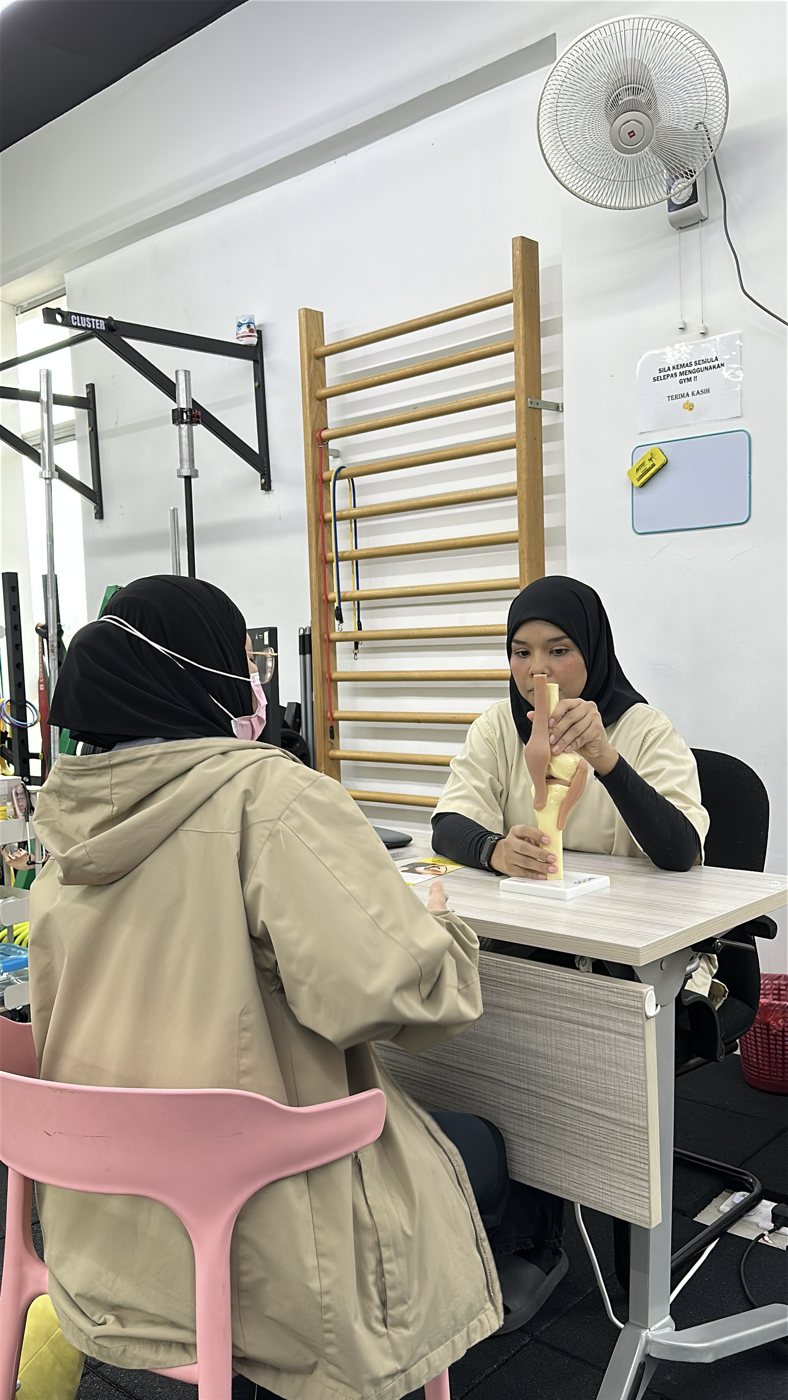
If you've never been to a physiotherapist before, the prospect can feel a bit mysterious. Will it hurt? Do you need to undress? What if you don't really know what's wrong? Will they just give you a massage?
Here's exactly what happens in a first physiotherapy session at Fisiouzma — so you walk in knowing what to expect and ready to get the most out of it.
Before you arrive
- Wear comfortable, movement-friendly clothes — shorts or loose trousers if it's a knee/hip/back issue; a singlet or T-shirt for shoulder/neck
- Bring any imaging you have (X-ray, MRI, ultrasound reports)
- Bring a list of current medications
- Bring your medical card if you're using insurance
- If you've had surgery, bring the surgeon's notes and any prescribed rehab protocol
- Arrive 5 minutes early to fill out a quick intake form
The first 10 minutes — Subjective assessment
This is the conversation part. The physiotherapist will ask you in detail about:
- What hurts and where exactly — pointing helps
- When it started — sudden injury or gradual onset?
- What makes it worse and what makes it better
- Your medical history — previous injuries, surgeries, conditions, medications
- Your work, lifestyle, exercise habits — context matters
- Your goals — what do you want to be able to do that you can't do now?
Be honest and specific. The more accurate your description, the more accurate the diagnosis. Don't leave out details because they "seem unrelated" — often they're the key clue.
The next 15–25 minutes — Physical assessment
This is where the physiotherapist examines you. Depending on your problem, this can include:
Observation
Looking at posture, alignment, muscle bulk, swelling, skin changes, and how you move.
Active range of motion
Asking you to move the affected area — bend forward, raise your arm, squat, etc. — and watching how much you can do and where it hurts.
Passive range of motion
The physiotherapist moves the joint for you, feeling for restriction, end-range quality, and pain response.
Strength testing
Asking you to push or hold against resistance to assess muscle strength on both sides.
Palpation
Feeling the tissue with their hands to identify tender spots, muscle tightness, swelling, or specific structures that are involved.
Special orthopaedic tests
Specific manoeuvres designed to test particular structures — ligaments, tendons, nerves. (E.g., the Lachman test for the ACL, the Spurling test for cervical nerve roots.)
Neurological screen (if relevant)
Reflexes, sensation testing, dermatome mapping — to rule out nerve involvement.
The middle of the session — Discussion and explanation
Once the assessment is complete, the physiotherapist will:
- Explain what they think is going on in plain language, often with anatomy models or diagrams
- Tell you what's NOT going on — ruling things out can be just as important
- Discuss prognosis — likely recovery timeline, what to expect
- Outline the treatment plan — what kind of treatment, how many sessions, what you'll do at home
- Refer for imaging or other opinions if needed — e.g., if they suspect a serious tear that needs an MRI, or a condition needing a specialist
- Answer all your questions — please ask anything
The last 20–30 minutes — First treatment
You won't leave the first session having only been talked to. The physiotherapist will start treatment, which could include:
- Manual therapy — joint mobilisation, soft tissue release, stretching
- Modalities — therapeutic ultrasound, TENS, heat or ice, possibly shockwave if appropriate
- Specific exercises — to start activating the right muscles or restoring movement
- Taping if it would help support you between sessions
You should feel some immediate benefit — often pain relief, sometimes improved range of motion. Sometimes there's a bit of post-treatment soreness for 24–48 hours, which is normal.
What you'll leave with
- A clear understanding of what's wrong and why
- A written home programme — usually 3–6 specific exercises with instructions
- Lifestyle and activity advice (what to do, what to avoid)
- A treatment plan — likely number of sessions, what to expect
- The next appointment booked (if appropriate)
Frequently asked first-visit questions
Do I need a doctor's referral?
No. You can self-refer directly to a physiotherapist in Malaysia.
Will it hurt?
Some treatments involve mild discomfort (especially during deep manual work or initial range-of-motion stretching), but should never be sharp or unbearable. Always tell the physiotherapist if something is too painful.
Do I need to undress?
You may need to expose the affected area. We use draping for privacy, and we have private treatment rooms. A female physiotherapist is available for female patients who prefer one.
How many sessions will I need?
Highly variable depending on your condition. Mild strains may resolve in 4–6 sessions. Knee pain might be 8–12. Post-surgical or stroke rehabilitation can be 20–40+ over months. We'll give you an honest estimate at your first visit.
Will I just get a massage?
No. Physiotherapy is fundamentally different from massage therapy. We diagnose, treat the underlying cause, and rebuild function — not just relax tight muscles. Manual therapy is one tool in a much larger toolbox.
How do I pay?
We accept cash, debit/credit cards, bank transfer, DuitNow QR, and most major medical cards (PMCare, HealthConnect, MEDKAD, ASP, ANGKASA). À la carte is RM250, with package savings.
Ready to book?
The most common feedback we hear after a first session is "I wish I'd come sooner." If something has been bothering you for more than a couple of weeks, WhatsApp us to book a first assessment.
We typically have same-week availability. Tell us what's bothering you and we'll find you a slot.
Have a question about your case?
WhatsApp us — describe your symptoms in your own words. We'll respond personally, usually within an hour.
 WhatsApp us
Related on Fisiouzma
Knee Pain Treatment in PJ
Our knee-pain service — conditions we treat, our approach, and what to expect.
See service →Back Pain & Slipped Disc
Drug-free, hands-on treatment for slipped disc, sciatica and back pain.
See service →5 Common Causes of Knee Pain
The five knee-pain causes we see most often — and how to spot yours.
Read article →Slipped Disc: Try Physio Before Surgery
Most slipped discs heal without surgery. Here's when to escalate.
Read article →