
Surgery was step one. Rehab is what gets you back.
Surgical outcomes are determined as much by what happens after the operation as during it. We work alongside your surgeon's protocol to rebuild strength, restore movement and return you to the life you had — or a better one.
 WhatsApp for assessment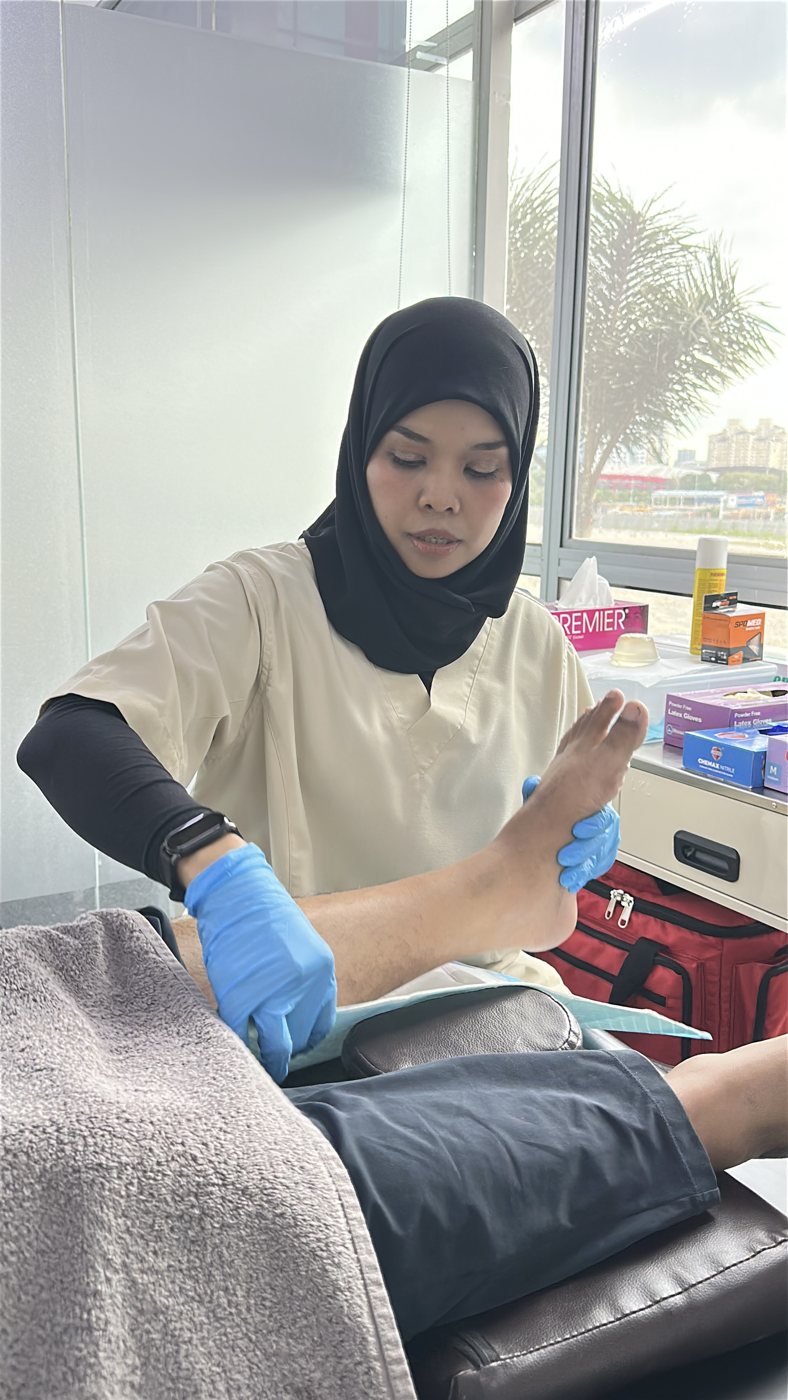
Surgeries we routinely rehab
We follow your surgeon's protocol where one is provided, and apply best-practice rehab where it isn't. Common cases:
Our post-surgical rehab model
Recovery happens in phases. We move you through each only when you've met the criteria — not on an arbitrary calendar. This is how complications stay low and outcomes stay high.
Phase 1 — Protect & activate
Manage swelling, scar mobility, gentle range of motion. Re-activate switched-off muscles around the operated area.
Phase 2 — Restore
Progressive range of motion, basic strength, walking re-education, transfer training. End-of-phase testing before progression.
Phase 3 — Strengthen
Progressive resistance, balance and proprioception, daily-task simulation. Return to full function.
Phase 4 — Performance
For active patients and athletes: sport-specific drills, plyometrics, hop and agility testing before clearance.
Techniques used in post-surgical care
Surgical scars, joint stiffness, muscle inhibition and fear of movement are all addressed:
- Manual Scar Mobilisation — Prevents adhesions, restores skin and fascia glide over the surgical site
- Joint Mobilisation — Restores normal joint glide lost during surgery and immobilisation
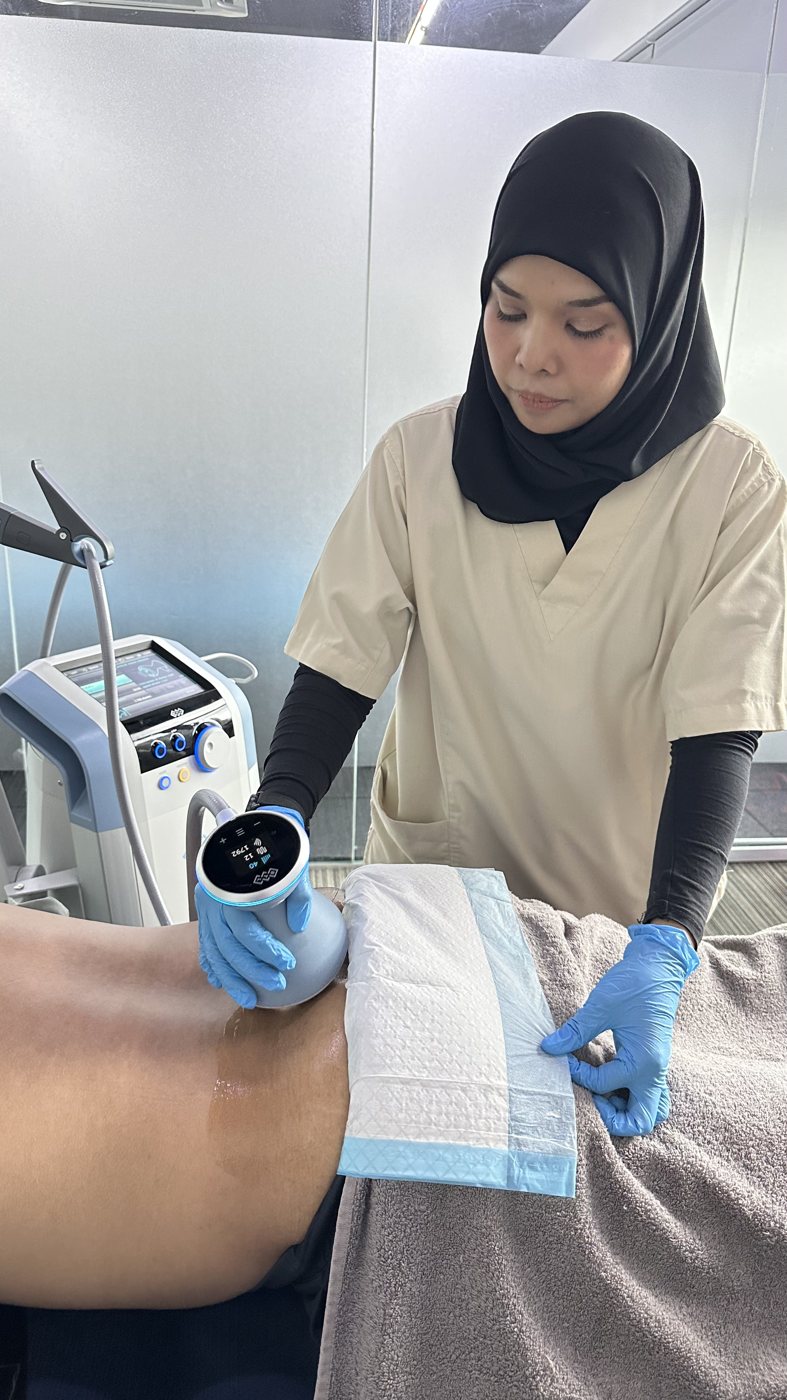
- Therapeutic Ultrasound — Reduces inflammation and helps soft tissue healing around the joint capsule
- Electrical Muscle Stimulation — Re-activates inhibited quads/glutes/rotator cuff post-op
- Progressive Strength Training — The single most important component — supervised, progressive, measurable
- Hydrotherapy referral — When indicated, we refer to partner pools for early water-based rehab
About post-surgical rehab treatment
When should I start physiotherapy after surgery?
Most orthopaedic surgeries benefit from rehab starting within 1–2 weeks. Some (ACL, rotator cuff) start earlier with gentle protocols. Bring your surgeon's discharge note and protocol — we follow it.
Will my insurance cover post-surgical rehab?
Most major medical cards do, especially when prescribed by your surgeon. We accept PMCare, HealthConnect, MEDKAD, ASP Medical and ANGKASA. WhatsApp us your card details and surgeon's referral to confirm.
How many sessions will I need after my surgery?
Varies by procedure. Typical ranges: ACL reconstruction 6–9 months (≈30–40 sessions over time); TKR/THR 8–12 sessions over 6 weeks then maintenance; rotator cuff 4–6 months (≈20–30 sessions); spinal surgery 8–16 sessions over 3 months.
Do you communicate with my surgeon?
Yes, with your permission. We send progress notes at key milestones and flag any concerns. Continuity of care produces better outcomes.
What if I'm getting surgery soon — should I do pre-hab?
Absolutely. Prehabilitation (strengthening and preparation before surgery) significantly improves outcomes. WhatsApp us at least 2–4 weeks before your scheduled date.
Make your surgery worth it.
Bring your surgeon's notes — we'll build a recovery plan that respects your protocol and pushes you, intelligently, to the best possible outcome.
Helpful reads from our blog
ACL Surgery Recovery Timeline
A realistic 9-month rehabilitation roadmap after ACL reconstruction.
Read article →Post-Stroke Recovery: First 6 Months
What to expect, and how to maximise recovery.
Read article →Your First Physio Session
A step-by-step walkthrough of what happens at your first visit.
Read article →