
Plantar Fasciitis: Why Your Heel Hurts in the Morning (And How to Fix It)
If your first few steps out of bed feel like walking on broken glass, you're not alone. Plantar fasciitis is one of the most common — and most fixable — heel problems we treat.
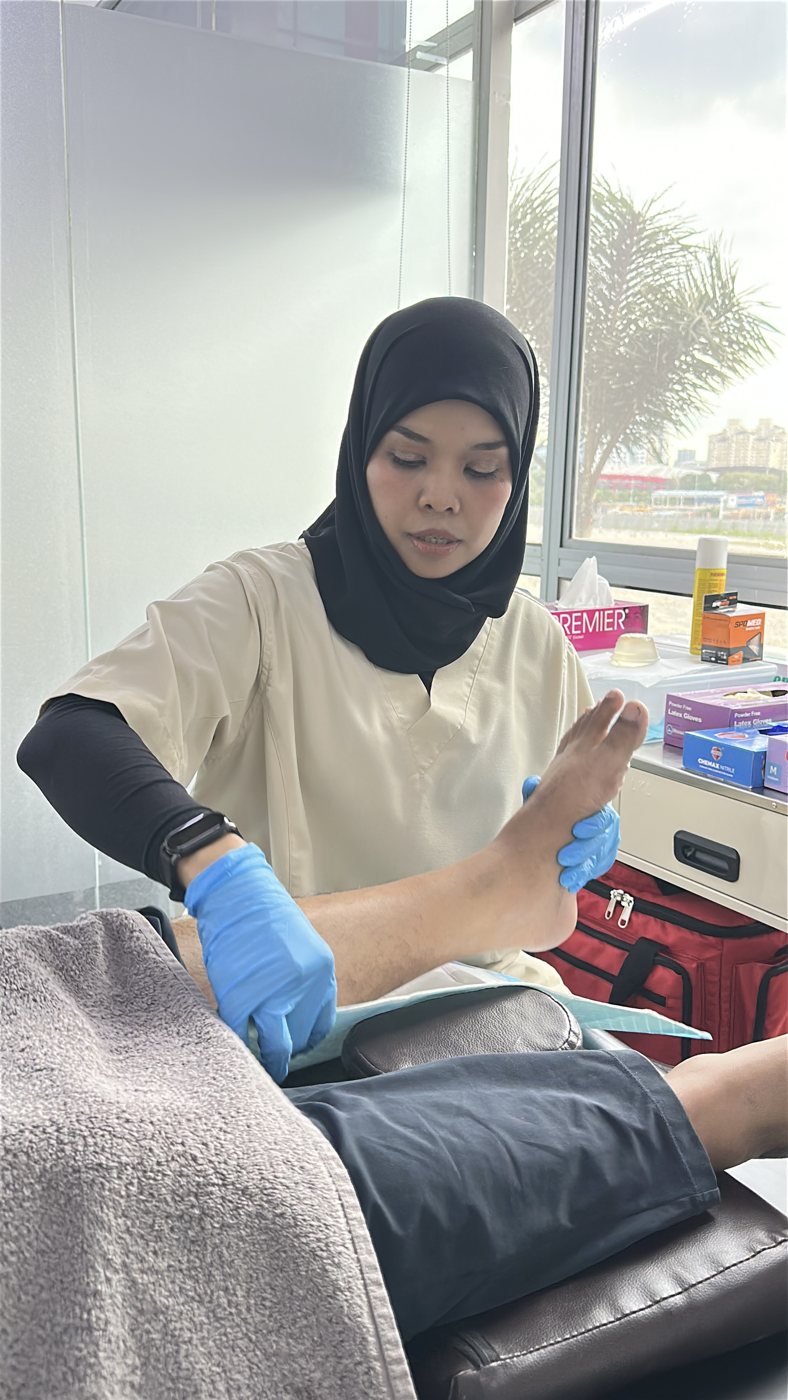
It's a classic story. You step out of bed, take your first few steps toward the bathroom, and a sharp pain shoots through the bottom of your heel. The pain eases after a few minutes of walking, but returns whenever you've been sitting for a while. By evening, your heel aches dully.
This is the textbook presentation of plantar fasciitis — one of the most common heel pain conditions, especially in adults aged 30–60.
What is plantar fasciitis?
The plantar fascia is a thick band of connective tissue that runs along the bottom of your foot, from your heel to your toes. It acts like a bowstring, supporting your arch and absorbing shock with every step.
In plantar fasciitis, this tissue becomes irritated and overloaded — typically where it attaches to the heel bone. Despite the "-itis" suffix (which suggests inflammation), modern research shows plantar fasciitis is more of a degenerative overuse problem than a true inflammatory one — which is why anti-inflammatories alone rarely fix it.
Why does it hurt most in the morning?
Overnight, the plantar fascia shortens slightly while you sleep. Your first steps in the morning suddenly stretch the irritated tissue, causing sharp pain. Once the tissue "warms up", the pain reduces — until you sit for a while, and the cycle repeats.
What causes it?
- Sudden increases in walking or running volume — common in people who start a new exercise programme
- Standing on hard surfaces all day — nurses, teachers, retail workers, factory workers
- Unsupportive footwear — flat sandals, worn-out shoes, walking barefoot on hard floors
- Tight calf muscles — increase load on the plantar fascia
- High or flat arches — both can predispose
- Carrying extra body weight
- Age 30–60 — peak incidence
What works (and what doesn't)
What works
1. Calf and plantar fascia stretching
Daily stretching of the calf (gastrocnemius and soleus) and the plantar fascia itself. These should be done multiple times daily for at least 8 weeks. Specific protocol: hold each stretch 30 seconds, 3–5 repetitions, 3+ times per day.
2. Loading / strengthening
Recent research (Rathleff et al., 2014) showed that heavy slow resistance training for the plantar fascia (using a towel under the toes, single-leg calf raises with bent toes) significantly outperforms stretching alone. This is now first-line treatment.
3. Focused shockwave therapy
For cases that have failed 3+ months of standard care, focused shockwave (which we offer at Fisiouzma with the BTL system) has strong research backing. Typically 3–5 sessions, with most patients seeing significant improvement.
4. Appropriate footwear
Supportive shoes with good arch support. Get rid of worn-out trainers. Avoid walking barefoot on hard floors at home — consider supportive house slippers or sandals.
5. A night splint
Keeps the foot in slight dorsiflexion overnight, preventing the morning shortening. Especially helpful for severe morning pain.
6. Activity modification (temporarily)
Reduce — don't stop — high-impact activity. Switch some runs to cycling or swimming. Return to running progressively as pain improves.
What's less effective
- Anti-inflammatories alone — give symptom relief but don't fix the underlying tissue problem
- Cortisone injections — provide short-term relief but increase risk of plantar fascia rupture; not first-line
- Just resting — the fascia needs gradual loading to rebuild capacity
- Generic insoles — may help slightly; custom orthotics are sometimes useful but not always necessary
How long does it take to recover?
- With consistent rehab: Most patients improve significantly in 6–12 weeks.
- Severe or chronic cases (>6 months): May need 3–6 months of rehab + shockwave therapy.
- Without treatment: Can persist for 1–2+ years.
When should you see a physio?
- Heel pain that's been there more than 2 weeks
- Pain affecting your work or daily life
- You've tried generic stretches and OTC insoles for a month without improvement
- You're starting to limp or change your gait to avoid pain (this leads to secondary issues)
What our plantar fasciitis treatment looks like
At Fisiouzma in Kelana Jaya, your first session includes a full assessment — gait analysis, palpation, footwear review, calf flexibility testing — followed by a clear diagnosis and a written home programme. For appropriate cases, we combine:
- Hands-on manual therapy and soft-tissue work on the calf and foot
- Specific stretching and loading exercises (the most important component)
- BTL focused shockwave therapy for chronic cases
- Footwear and lifestyle modification advice
- Kinesio taping for short-term symptom relief if needed
If your heel has been hurting for more than a few weeks, WhatsApp us. The earlier plantar fasciitis is addressed properly, the simpler the fix.
Have a question about your case?
WhatsApp us — describe your symptoms in your own words. We'll respond personally, usually within an hour.
 WhatsApp us
Related on Fisiouzma
Sports Injury Rehab
Return to sport stronger and faster with our evidence-based programme.
See service →Elderly Rehab & Fall Prevention
Strength, balance and gait training to help your parents stay independent.
See service →Frozen Shoulder Explained
Causes, stages, and how we treat it in Malaysia.
Read article →Your First Physio Session
A step-by-step walkthrough of what happens at your first visit.
Read article →